How Mass Production Has Affected Our World

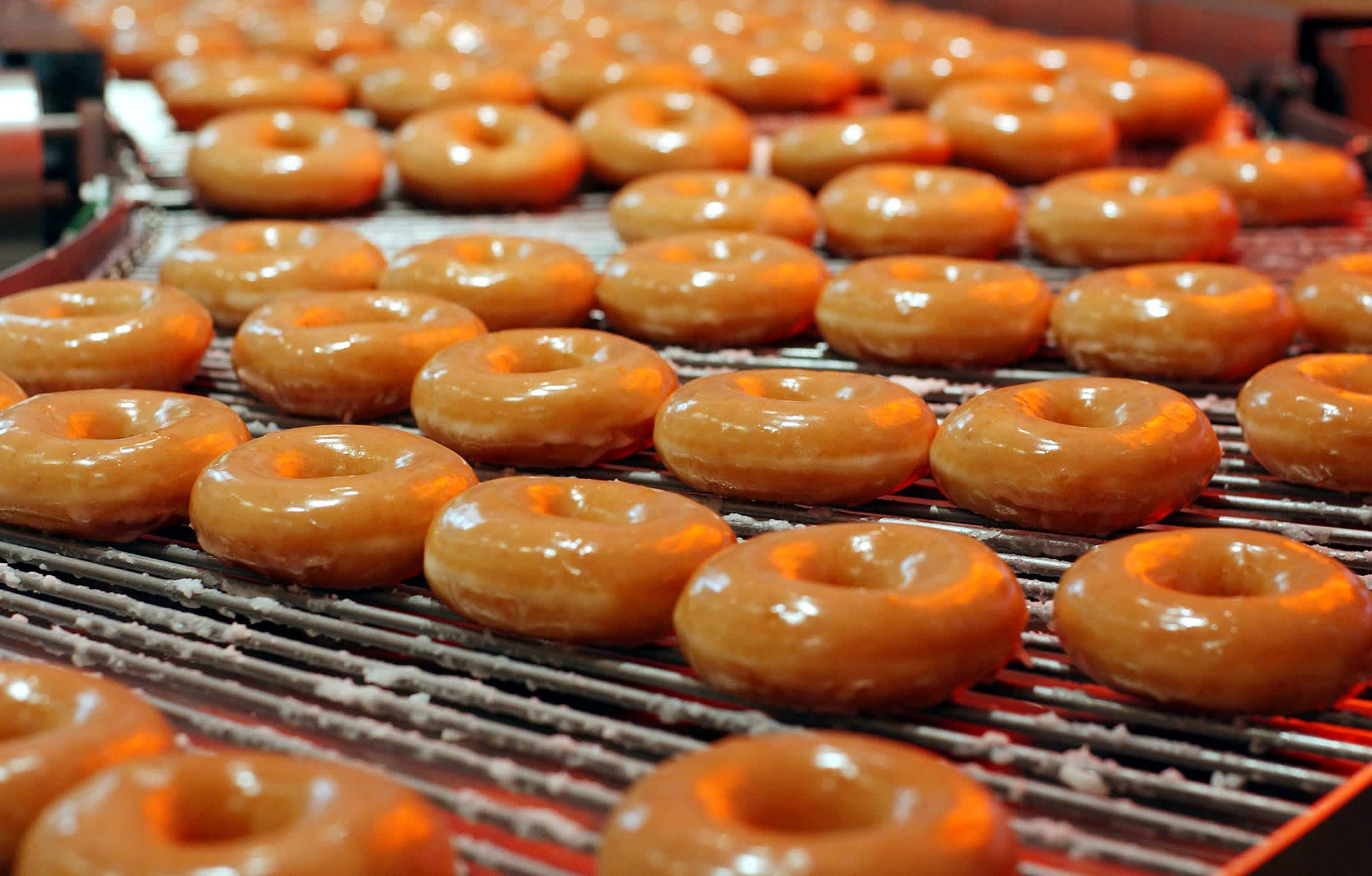
Krispy Kreme IPO: DNUT starts trading on the Nasdaq

Mass production. As anyone studying economy can tell you, the demand must always be higher than the supply for a successful business. Even if there is no intention for the product to be exclusive, if you want your product to sell, you need to be needed more by the customers than you need the customer. This is the first rule of economics, but any industry that partakes in mass production thinks otherwise. They always want to have their product at the ready for use by the consumer. We see these trends in the industries of cars, clothes, furniture, and most importantly, food.

Mass production hasn’t always been a problem, and the techniques which built up to it were revolutionary in the world of technology. The production line from Henry Ford in 1913, the Speedee Service System from the McDonald brothers in 1948, and the evolution of industrialism over the last few centuries have all played their own role in this rapidly changing ecosystem. These systems were put in place to maximize efficiency and reduce stress. All business owners wanted to be the head of the most reliable business in its own industry. Ford made cars accessible to the middle class, and McDonald’s advertised their product so that it seemed attractive to every group of people. Quality wasn’t the main focus at the time, but it was still a factor which played a role in the validity of the product. As time went on, mass production has brought down the quality of products. It has gone unnoticed for a long time, because the price has gone down along with the quality.

Mass production has become socially acceptable for a multitude of reasons. The most successful companies in the world all rely on mass production in some shape or form. This gives mass production a good name. Apple is in possession of the facilities to produce 500,000 iPhones in one day! McDonalds do sell over 50,000,000 burgers a day! Without modern techniques in mass production, they wouldn’t be able to reach these milestones.

To sum it up, modern companies require modern solutions to the high demand that exists for any important product. They chose to resort to a method which prioritizes efficiency over quality. And for this, they are rewarded with billions of dollars of revenue. Though we as a species are meant to continue in our progression through evolution, some things should not be treated as collateral damage. The effects that low quality products can have could be detrimental to any consumer’s wellbeing. This is why it is important to stick to high quality foods and appliances.

Coffee

How to tap into the health benefits of coffee

Coffee is among the most consumed beverages in the world, falling just short of tea and water. Most adults drink it, most teenagers do as well. It is produced by more than 70 countries worldwide, and coffee beans industry is valued over $100,000,000,000. In this post, I will guide you through the process of how coffee beans start in countries like Brazil, Vietnam, and Colombia, and end up in landfills and composters.

Coffee beans have been a part of culture in African and Asian countries for hundreds of years. There is a legend dating back 1300 years about a goat herder in Ethiopia. The legend claims that the herder kept his male goats in one pen, and his female goats in the other. After his separation of the goats, he noticed that the male goats had more energy than the female goats. After inspection, he discovered the existence of the first coffee plant. This legend does not make perfect sense, as the plant which would have been found in Ethiopia is called coffea arabica, and this plant does not give an extreme change in energy until its fruit is roasted or cooked. In the 1500s, villages in the Middle East began boiling a bitter drink with this coffea arabica, and that was the first coffee. In the 1600s, the methodologies of boiling this bitter plant spread as far east as India and the mountainous Himalayas, and was then cultivated in Europe. In the 1700s, the non-native plant was cultivated in South America, where it now prospers. 5 out of 10 of the countries which produce the most coffee beans are located in the Americas. After that, coffee became a more popular drink, and it evolved into a sweeter drink. Now, coffee has as many variations as there are seasons of The Simpsons.

Coffee can be prepared in many different ways, and each culture and species of coffee plant has its own specifications. The most common coffee, Arabica, is prepared with these instructions. The process begins by obtaining roasted coffee beans. These beans are harvested from the center of the plant. After the beans are roasted, they should normally be grinded right before use. If they are grinded by the packaging company, then the coffee will definitely lose its flavor. After you grind the beans, simmer them in a small amount of water. This is also when you can add different spices, such as cardamom and saffron. After the grinded beans are simmered, you need to boil it in a full pot. You pour the beans into the pot, along with all the water from the simmer. Then, you add the rest of your water, until it is a bit more than your desired amount. Boil the coffee for five minutes while stirring, as the excess water evaporates. Finally, you strain the coffee. For the flavor to be strong, let the coffee sit for 20 minutes before adding any foam or milk to it.

Now, it is time to talk about all the waste that comes from coffee. I’m not talking about landfill waste, I’m talking about health waste. People add lots of toppings to their coffee, making it unhealthy. They add many grams of sugar, fatty milks and creams, and some specialties are just plain junk food. The purpose of this blog was to show the harsh reality about how our modern world takes any food and makes it unhealthy. Coffee could have been a staple of the world even without cream and sugar. But our society could not let that be.

Christmas Meals

The Best Christmas Meal Delivery Services - Variety

Christmas is a holiday that has been celebrated for almost two millenniums. It is a holiday to celebrate the spirit of giving, along with the birth of Jesus Christ. There are many dietary traditions that go along with the holiday. If you celebrate Christmas, then read this blog so that you are able to make informed decisions on what to eat when you are hanging out with your family.

Important foods that are in most traditional Christmas meals are roast potatoes, Brussels sprouts, and puddings. Normally, these foods are okay to have in proportion. But as mentioned in my previous blog, the problem is proportion. With this new set of food items, there are other problems that arise. The three foods that I chose have different problems, which should all be handled differently.

Roast potatoes are the first on the list. Potatoes are some of the least nutritious vegetables in the world. You can usually judge the nutritional value of a vegetable or fruit based on the color of it’s flesh. Potatoes have white flesh. A lack of color indicates a lack of nutrients. The only result that a potato consumer can see is an increase in carbohydrates and starch in their bodies. This can cause retention of water, making you feel bloated and sick. Roasting is a good method of cooking, because it doesn’t drain out nutrients. But when someone is roasting potatoes, there are barely nutrients to start with.

Brussels sprouts are next on the list. After explaining how a “bad” vegetable doesn’t help your body, it is probably surprising to see a “good” vegetable like Brussels sprouts on this list. This is surprising, as long as you are only counting the vegetable by itself. Unfortunately, the problem is not with the vegetable, but with the flavorings and methods of cooking, their nutrition is dwindled. They are normally shallow fried, or sautéed in large amounts of oil. Then, they are lathered with sugary and savory sauces, which add fat and sodium to the mix. American culture is known for taking foods and making it more unhealthy. Brussels sprouts on Christmas is an example of that.

Puddings are the most despicable item on the list. Yorkshire puddings are common on Christmas, so the nutrition information will be derived from Yorkshire pudding. There is simply no purpose for eating Yorkshire pudding. There is no benefit at all. A 100 gram serving of this pudding has 200 calories, all of them being empty. Over 10 grams of fat, 100 milligrams of cholesterol, and 190 milligrams of sodium. There are also almost 20 grams of carbohydrates. Yorkshire pudding is made from salt, flour, eggs, oil, and whole milk. Though it isn’t a sweet food, it still manages to have high amounts of carbohydrates. Yorkshire puddings have one of the worst combinations of food. Out of all savory baked goods, Yorkshire pudding is the one dish which you should avoid on Christmas nights. There is a joke that all the people in the United Kingdom who have issues with their weight are enjoyers of Yorkshire pudding. This joke has a strong basis, and might as well be responsible for the 31% obese population of the UK.

Jokes aside, you should always be aware of the negative buildups of different foods. Some might be high in sodium, endangering the blood flow to your heart and brain. Some might cause fat buildups. Some might unnecessarily bloat you. Remember to stay informed, and stay healthy!

Thanksgiving Meals

Classic Thanksgiving Menu and Recipes

For centuries, Thanksgiving has been a holiday most commonly celebrated with food. Large amounts of it. As time has gone on, people have brought their own unique innovations into the holiday, and the food is what makes it special. But now, as obesity rates skyrocket, can we afford to continue making these unhealthy choices? Read on to see how we can improve our diets every time we eat a Thanksgiving meal.

Some of the staple items at a Thanksgiving table are the following: a roasted turkey, a pumpkin pie, mashed potatoes, gravy, cranberry sauce, and a sweet potato casserole. Other items that could be served include different meats, such as ham and chicken. There are also many vegetable based dishes.

A 3 ounce serving of turkey contains 173 calories, over 5 grams of fat, and over 20 grams of protein. Turkey is also high in vitamins and minerals. This doesn’t seem unhealthy, but the portion size of turkey is often over the recommended 3 ounces, and the grams of fat keep on piling up. The pumpkin pie is the next item that needs to be broken down. Check yesterday’s fast fact about pumpkin pie for further information on this iconic dessert. A 5 ounce serving of pumpkin pie contains 323 calories, 13 grams of fat, 46 grams of carbohydrates, 35 milligrams of cholesterol, and 318 milligrams of sodium. If you thought the unseasoned turkey was unhealthy, then this is unacceptable. And most people eat multiple slices of pie, thinking “It’s only once a year…”. If you want to take it even further, with the third of the Holy Trinity in Thanksgiving food, let’s take a look at mashed potatoes with gravy. A 10 ounce serving of mashed potatoes contains 265 calories, 20 grams of fat, 1143 milligrams of sodium, and 42 grams of carbohydrates. Mashed potatoes are among some of the worst food items to overeat. The sodium and carbohydrates build up and are the biggest factors to blame for heartburn.

A Thanksgiving meal is not to blame for what this holiday has turned into. The lack of portion control for each item individually has caused the holiday to be known for gaining weight and making unhealthy choices. As the holiday continues to be innovated, there are healthier recipes everywhere. Be encouraged to try them out. Stay healthy!

Intro to Irrigation Around the World

Why All Farms Don't Use Drip Irrigation - Water Footprint Calculator

Irrigation has been around since 6000 BC. It was developed by farmers who had reached the maximum capacity around lakes and rivers. Irrigation is the transportation of the supply of water that contributes to crop growth. In the early days, irrigation was quite similar to a plumbing system, as the water was designed to go around the city and reach all the places it had to, just for the excess to feed back into the ocean.

Since then, irrigation has greatly developed. In the early days of development, people learned how to use dams to control the water flow into one exact place. Then, canals were built all around the cities to have a larger water flow all over the city. These were the basic developments, and they are both still used to an extent in modern day. As time progressed, and goods were able to be transported more efficiently, people could start using the best materials for the job. In more modern history, metal pipes were starting to be used. All these developments were extremely meaningful, and farmers were able to be much more productive.

The reason why irrigation came to existence in the first place was to make farming more efficient and accessible, which would cause more plants and crops being grown each season. Now, there are huge facilities who focus on mass producing plants and vegetables however they can. Now that you have the basic summary of irrigation, keep an eye out for a new blog about how big companies are using it to their advantage.

The 77 Cent Big Mac

File:McDonald's 1960 logo.png - Wikimedia Commons

The Big Mac is a burger which has been discussed on this blog before. A few revelations have been made about the burger, and there continue to be discoveries and innovations in this subject. As McDonald’s gets richer as a company, the prices go up, and the production cost for most of their food items go down. This results in a huge profit margin.

When the restaurants started selling Big Macs, it was already 1967, well after Ray Kroc took over the company. The Big Mac was priced at $0.45, which is over $3 in current day money. It took almost $0.30 to produce a Big Mac, which is $2. Since then, the prices have gone down in production and up in the retail price. The Big Mac has gotten bigger itself, but the production cost is now a whopping $0.77! They sell it for $4 in most places, but the average price around the world is just over $5.50 USD.

There is one more figure, which is the most startling yet. It was discovered by a home cook, Jim James, that if you make a Big Mac at home, buying all the ingredients separately and what McDonald’s claims that their burger has, it would add up to $6.63. This is almost 9 times the price that McDonald’s produces their burgers with. This figure could be summed up by saying McDonald’s is buying their products in bulk, but when their expenses are only 11.6% the price of buying all the ingredients separately, anyone can see that something fraudulent is going on.

Chipotle’s New Protein Option

Chipotle takes up smoked brisket | 2020-11-30 | MEAT+POULTRY

During late September, Chipotle locations around the United States started offering a new meat option; Smoked Brisket. After testing around Ohio and California for almost two years, the message was broadcasted. Chipotle would be changing their protein options, for the first time since Carne Asada.

CMO Chris Brandt says, “We’ve created a differentiated Smoked Brisket recipe that is authentic to our menu and pairs flawlessly with our real ingredients,”. Smoked Brisket is the third innovation that the fast food giant has released this year, along with Cilantro-Lime Cauliflower Rice, and a Hand-Crafted Quesadilla.

Most critics have a positive opinion on the Smoked Brisket, but when you look at the nutrition information, you’ll be able to decide for yourself whether this is a smart protein option. A serving of smoked brisket totals to 360 calories, crushing the two most common protein options; chicken at 180 calories, and steak at 150 calories. 22 grams of protein puts it just above steak, which tallies in at 21 grams. The 5 grams of sugar come from the brisket sauce. The most surprising fact in your Chipotle brisket journey is the 27 grams of fat in one serving. For comparison, a serving of steak contains only 6 grams. Eating a burrito with Smoked Brisket takes up over 60% of your Daily Value of fat. The 27 grams of fat is the deciding factor in whether a consumer decides to go with the brisket or not.

At the end of the day, unhealthy and fatty meats are okay to eat in moderation. Fats are essential for body growth throughout your life, but remember to stick to the healthier fats. Stay healthy!

The Big Mac

The Big Mac is the most popular burger in the world. Each year, 550 million of these burgers are produced and consumed. In this post, the true value of the Big Mac will be discovered. Read on.

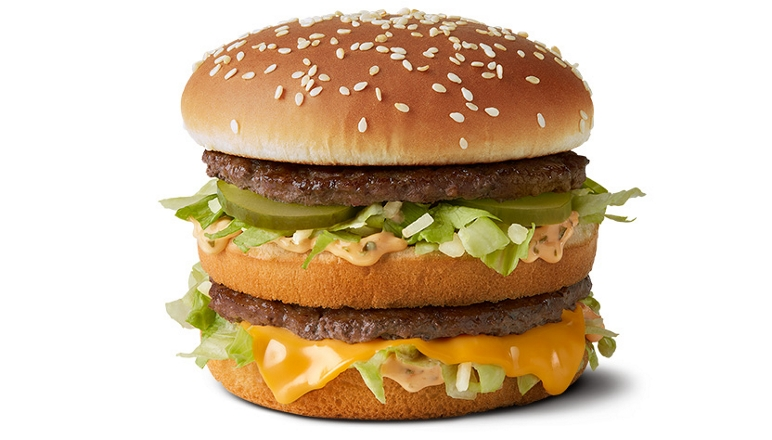
The Big Mac is a large burger, weighing in at 225 grams. It contains 2 beef patties, 3 buns, a slice of American cheese, pickles, onions, lettuce, and Big Mac sauce. This burger is high in fats and sodium, taking up half of your suggested daily value! It’s 11 grams of saturated fat is 53% of your daily value, along with the 1010 milligrams of sodium, which is almost 30% of your daily value. There are decent levels of iron, weighing in at 4.4 mg. There is almost no nutritional value, though there are small amounts of calcium, potassium, and fiber.

At McDonald’s, the retail price of a Big Mac is $3.99, which is a low price for a burger. There are other factors to calculate, such as methods used to get the ingredients, the preservatives and chemicals in the food, and the general advisory not to consume these burgers regularly, buying this burger is a slight of a dilemma. At the end of the day, you need to decide between a healthier lifestyle, or saving a few bucks on a burger. Stay healthy!

Advertising Towards Children

TV Screen Time Exceeds 3 Hours for Babies: JAMA Study | Fortune

Have you ever been scrolling through the internet and come across an ad for fast food? Well this is highly likely. A recent government directed experiment has told us that 44% of the ads we see on a daily basis are related to or promoting consumption of fast food. This number is already a very big number, but it will be outrageous once you find out why.

Yum! Brands is listed as a Fast Food corporation, but in reality, it is responsible for the rise of obesity in children over the last 20 years. In 2004, Yum! Brands held a conference in Singapore called “Top Ten Ways to Market Asian Youths of Today”. This conference was organized due to the fact that children were starting to spend time watching television and society as a whole was starting to be more technology based than ever before. Yum! Brands chose to exploit this fact, and they wanted to market towards children specifically. Their logic was this: Children have 70 years of their life left to live, which can equate to 70 years of being a loyal customer. Since children can learn a lot quicker than adults, it would be easier to spread the idea of fast food through the minds of children. This corporation would corrupt an entire generation just to make more sales.

Corporations like this have taken over the world. They hold the health of the human race at their fingertips, and they are using their power in the worst way possible. Fast Food is an industry that can only be stopped once everyone understands the truth about it. We need to stop funding these corporations, and we need to stop falling for all of their mind tricks. This is the only way to save ourselves.

School Lunches (The Solutions)

Here's your school district's lunch debt policy

Before reading this blog, you should make sure that you have read the previous one. It regards the “Problems” aspect of School Lunches. Think of this blog as a sequel to the previous.

One main problem to address with school lunches is the actual nutritional benefit. Most students choose to leave the healthy options out of their diet. The first step to healthy lunches is to inform all students what they are missing out on. The first step to getting through any roadblock is acceptance, and most children don’t accept that what they are doing is unhealthy.

Schools can also provide healthy lunch options that are interesting to eat. Presentation and taste go hand in hand to create an appealing meal, and if you can’t provide both of these things, then no school can expect the average student to eat healthier.

If schools can combine the two ideas of knowledge and interesting foods, then the future generations will grow up on healthy food, which will give us a healthier world.