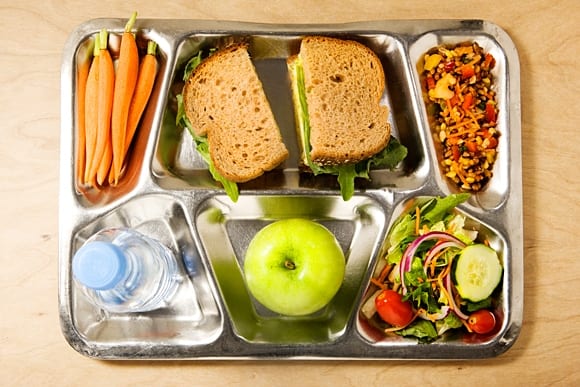
School Lunches (The Problems)

Sixteen School Lunch Programs Making a Difference – Food Tank

A high percent of the public school system is infamous for its subpar lunches. The food looks and tastes extremely unappetizing. And even though they have a rule that everyone must take a fruit or a vegetable, the lack of nutrition in these lunches is astounding. As we get into it, please keep in mind that all schools are trying to meet expected standards, but there are some obstacles in the way sometimes. The first crucial point is that children can decline to eat any food they don’t want to eat. This seems like a good idea because you should be able to eat what you want to eat. The problem that arises is some children will probably decline all the healthy options which the school provides, and this is one obstacle that they face. I am not saying that schools should be able to force kids to eat all the food, but schools can take other paths to keep their students healthy and meet all the requirements of the FDA. Another flaw with how schools plan out the lunches is MyPlate. MyPlate is a nutrition guide that contains the five food groups which people should be consuming. The groups are Protein, Grains, Fruits, Vegetables, and Dairy. This format for a school lunch is not effective, as it is hard to follow. Not every kid wants to eat a vegetable, and not every kid can drink a carton of milk with their sandwich. When kids aren’t getting all the nutrition they need from school, only one thing can be held responsible. The MyPlate. In theory, this would work perfectly. And it is still suggested to try and follow MyPlate to your best ability. But in school, this cannot be controlled. In life, there are always inconveniences and roadblocks. But you still need to do the best you can. Remember to stay healthy! Stay tuned for another blog regarding School Lunches, and this time, we are going over solutions.

The Types of Sugars

Sugar Facts - Diabetes Self-Management

When you think of “sugar”, you most likely think of table sugar, which comes in white crystals. But you might be surprised to know that this is just one variety of sugar called sucrose. There are six other types of sugars which are also relatively abundant. All sugars are carbohyrates. A simple sugar is a monosaccharide. Fructose is one of them. Fructose the the sweetener of all fruits, and is known as fruit sugar. It is also found in honey. Next is a very popular sugar, known as glucose. Glucose is a simple sugar that plants can consume. Glucose is special because it is the simplest carbohydrate. After glucose is galactose. Galactose is just about as sweet as glucose, and both of them together form our next sugar, lactose. Lactose is different from all the previous sugars because it is a complex sugar, a disaccharide. Now that we are on the topic of complex sugars, we should circle back to the original sugar mentioned, which is sucrose. Sucrose is a combination of glucose and fructose. After that is maltose, which is when there are two glucose units that are linked. Finally, we have xylose which exists outside of this family tree. Funnily enough, xylose is the sugar found in wood and bark. These sugars have different nutritional benefits and are formed differently. Stay healthy!

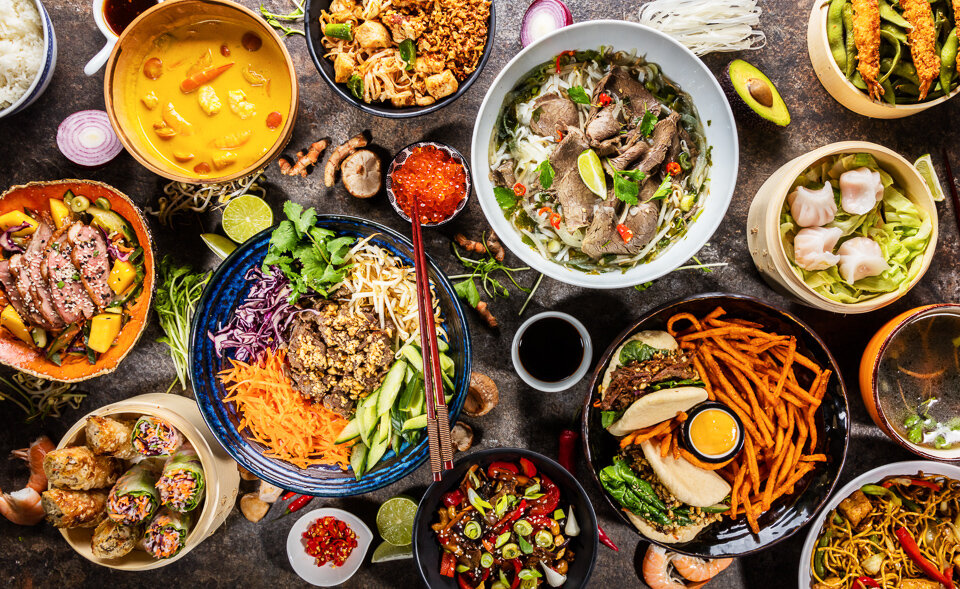
The Types of Diets

Traditional Food Around the World: 50 Famous Dishes You Have To Try —  Travlinmad Slow Travel Blog

In the animal kingdom, animals require different supplements and follow different diets. Some animals only eat meat, which is carnivorous. Some animals only eat plants, which is herbivorous. Humans are an omnivorous species, which means they can eat meat and plants. But some people have different dietary requirements. There are a few common diets which humans follow, some being omnivorous, others herbivorous. A plain omnivorous diet can eat all types of meats, plants, and animal products. This is the most common diet which most people follow. If you take away a few things, you get a pescatarian. Pescatarians can only eat fish meat. Some pescatarians also eat white meat, pollo-pescatarians. The general division between a pescatarian and an omnivore is red meat. A step after pescetarianism is vegetarianism, someone who cuts out all meat products. The final step is veganism. The difference between vegetarianism and veganism is animal products. To explain further, animal products are all the items that animals make. This includes eggs, milk, honey, and any food that comes from animal bones. At the end of the day, people need to choose a diet that they think works for them. Remember to eat good food and stay healthy!