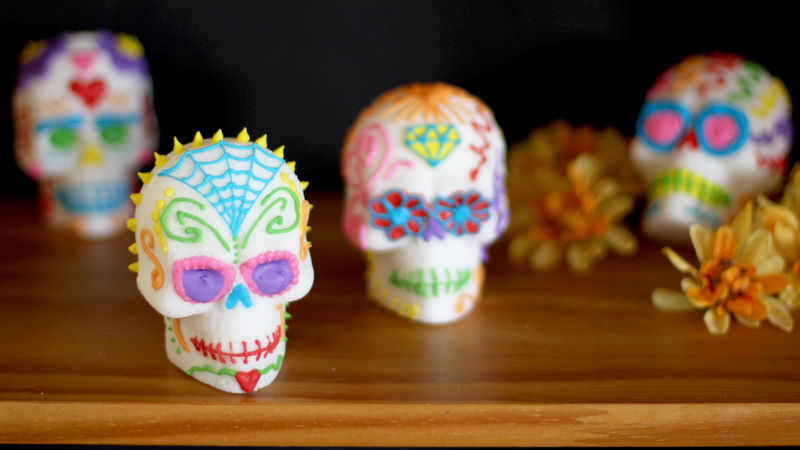
Whether it be the stunning sugar skills pictures above, or the colorful parades in the streets of Mexico, el Dia de los Muertos is a beatiful holiday which presents diverse cuisine and a glimpse into the culture. Halloween’s cuisine, albeit a more famous one, consists of chocolate bars and blocks of sugar that do not resemble a skull in any way. Its less famous cousin is never lacking in calaveras: the Spanish word for sugar skulls.
The Day of the Dead is a Mexican holiday celebrated each year from October 31 to November 2, in which families welcome back the souls of deceased relatives for a brief reunion. Blending Mesoamerican ritual, European religion, and Spanish culture, the holiday has origins dating back 3000 years to Aztec traditions honoring the dead in the summer month. When Spanish conquistadores arrived in Mexico in the 1500s, they brought All Saints’ Day and All Souls’ Day celebrations from medieval Europe, which were incorporated with existing death-related festivities. Today, the holiday involves family gatherings at gravesites or altars in homes, with offerings of the deceased’s favorite foods and drinks. Decorations feature skulls, skeletons, marigolds, and the bread pan de muerto. Key symbols include La Calavera Catrina, an elegant skeleton in fancy clothes representing Mexicans embracing their heritage. While increasingly celebrated globally, the holiday maintains its core focus on remembering and celebrating departed loved ones.
Some of the key savory dishes associated with Day of the Dead celebrations include mole negro, a complex chile-based sauce; tamales, masa stuffed with fillings and steamed in corn husks; red pozole, a spicy meat and hominy stew; sopa azteca, a tortilla soup with avocado, cheese, and other toppings; and chapulines, roasted grasshoppers seasoned with garlic, lime, and salt. Regional savory foods like calabaza en tacha, a candied pumpkin dish, are also featured. These hearty, protein-rich dishes provide sustenance during the long nights of honoring deceased loved ones and represent cultural traditions passed down through generations. Their preparation and consumption helps celebrate the cycle of life and death.
The holiday features an array of sweet foods and desserts like sugar skulls, the decorative calaveras; pan de muertos, a sweet bread with bone-shaped decorations; calabaza en tacha, candied pumpkin; flan, a creamy egg custard; alegrias, puffed amaranth treats; and pepitorias, candies made of pumpkin seeds and sugar. Other sweets include atole, a cornstarch-based drink flavored with cinnamon; champurrado, chocolate-flavored atole; Mexican hot chocolate spiced with cinnamon and chili powder; and horchata, a sweet rice milk. These confections provide a touch of sweetness while honoring deceased loved ones. Their bright decorations and inclusion on the ceremonial altars represent the sweetness of life and hope for the departed’s peaceful journey.
Dia de los Muertos is such an influential holiday that statista.com reports upwards of 74% of Mexican people celebrating this holiday! The level of unity that this occasion brings is almost unparalleled. To all those celebrating: feliz dia de muertos, and to those not celebrating: try a new tradition this year!
Sources:
https://www.cozymeal.com/magazine/day-of-the-dead-food
https://www.history.com/topics/halloween/day-of-the-dead
https://www.statista.com/statistics/1274308/mexico-distribution-people-celebrate-dia-de-muertos/


 Fast Food Fraud Food